The reading desk
Read the claim. Then find the evidence.
Before a headline changes your mind, give its supporting facts a little room to speak.
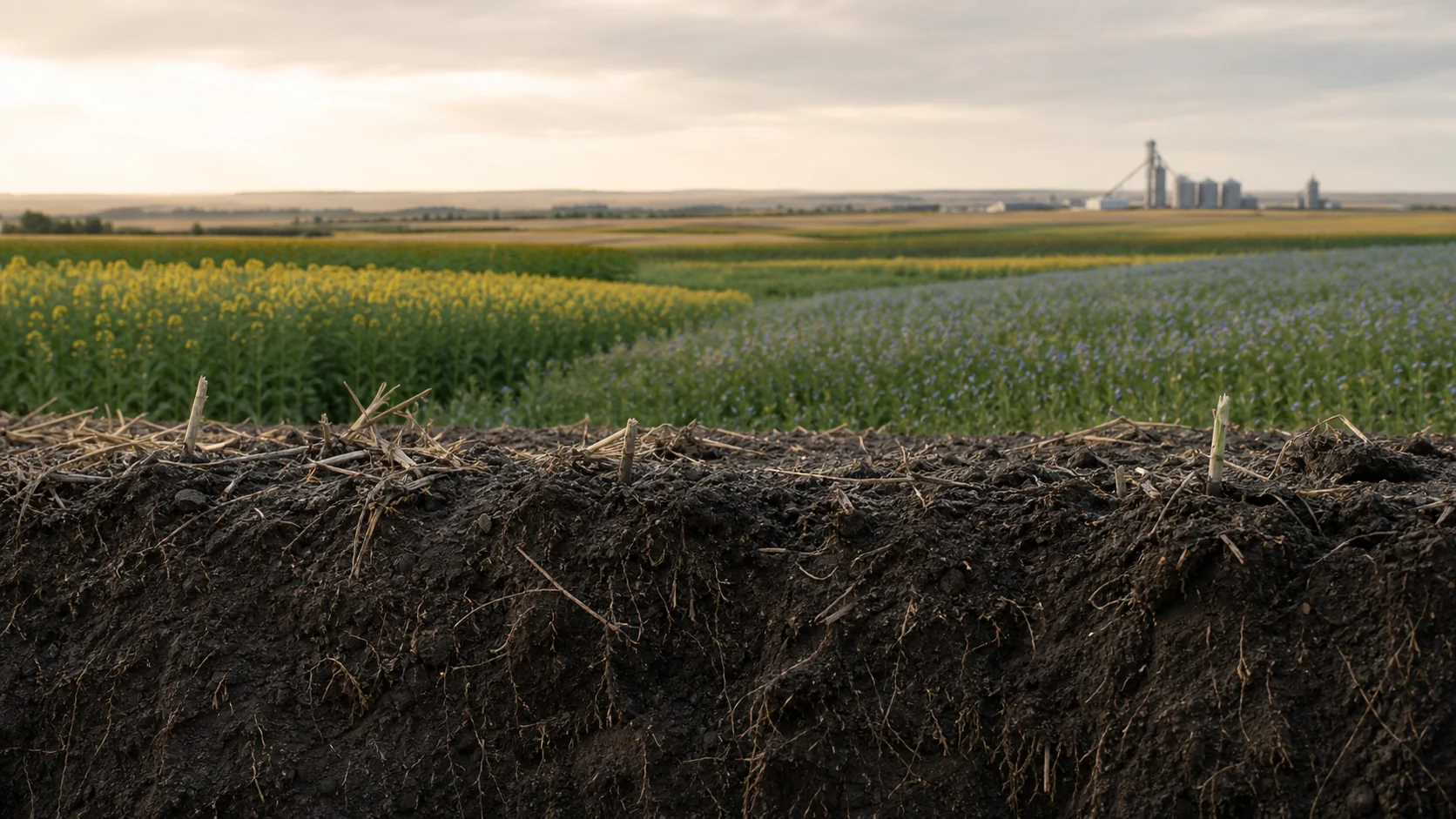
Make the claim specific
A useful claim should survive a few plain questions. What exactly is being said? Compared with what? Measured where, over which period, and by whom? You do not need to settle an entire argument to discover that one sentence is doing more work than its evidence can carry.
Start by writing the claim in ordinary language. Words such as better, cleaner and more efficient need an object. Better for which task? More efficient per kilogram of product, per hectare or over the whole operation? A comparison becomes easier to assess when the two sides use the same unit and describe the same thing.
Read the boundary and the date
Find the source behind the sentence. Open the underlying table, paper, official rule or recorded method when it is available. Read what its author actually measured. A study of one process does not describe every product made from the same crop. A regional average does not predict an individual field. A forecast gives a dated outlook; it does not become an observation because it is presented in a confident graphic.
Then inspect the date and the boundary. The relevant date might be the harvest year, the survey period, the forecast issue time or the moment a price was quoted. A page's recent update date may refer to an edit rather than a new measurement. Write down the period the evidence covers before deciding whether it answers today's question.
Give uncertainty a next step
Numbers also deserve their surrounding words. Check the denominator, the geography and whether a result is an average, a range or a single example. Missing information should remain visible. An empty freight field is an unanswered question, not evidence that delivery is free. Converting units can make two prices legible without making the underlying offers equivalent.
Consider what would change your conclusion. Another season? A different process? An omitted cost? A result repeated under conditions closer to yours? This is a useful way to turn uncertainty into a next step. You can acknowledge a finding while keeping its reach proportionate to the method behind it.
At The Fresh, that is the reading habit we want our work to encourage. Look closely, follow the source and keep the question specific. A good explanation leaves you able to inspect the important parts for yourself. It also makes it comfortable to say, with precision, what you do not yet know.
Keep reading
These public resources introduce the underlying subject. For an individual claim, follow the specific source record and its date.
Another way in